- Lucie TESTARD
- - Aug. 5, 2026

Set amongst mountains, rivers and hilltop villages, the Ardèche boasts a heritage as mysterious as it is spectacular. For centuries, the locals have passed down tales blending ancient beliefs, devilish pacts and unexplained phenomena. These legends continue to shape the cultural identity of the Ardèche to this day and attract history buffs and mystery enthusiasts alike.
Discover five iconic myths that capture the imagination of the Ardèche !
1. Crussolius, the giant builder of Crussol
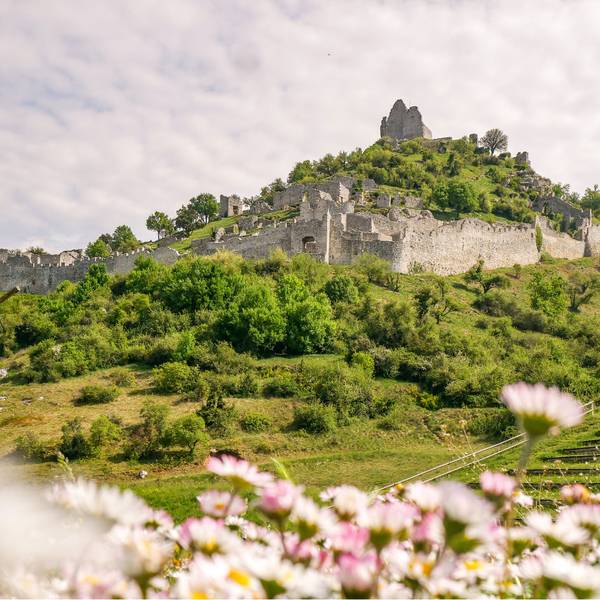
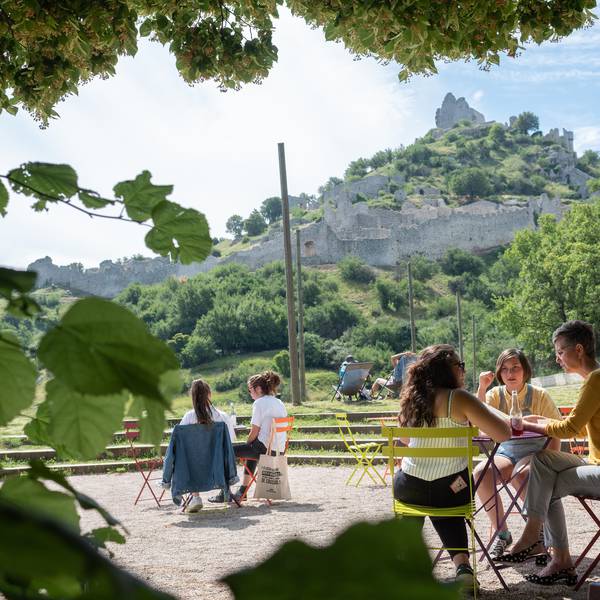
Perched on its rock above the Rhône, Crussol Castle has been a sight to behold for centuries. Faced with this immense and inaccessible fortress, the local people long believed that no ordinary man could have built such a place. Thus was born the legend of Crussolius, the giant builder.
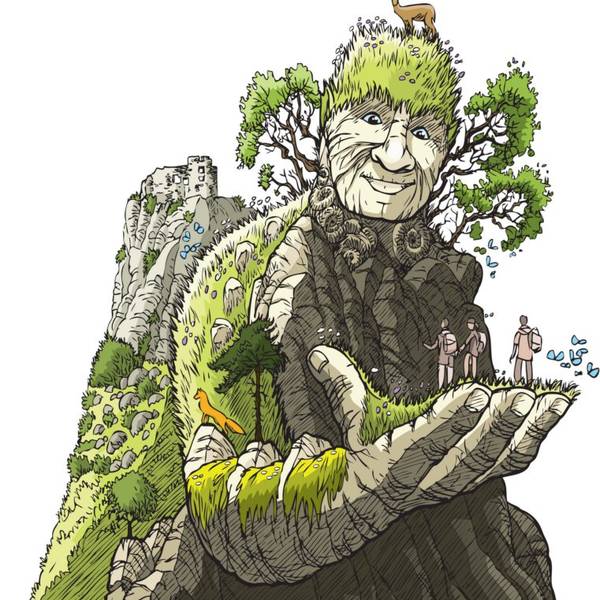
The lords of Crussol traced their origins back to this giant, described as a king of the Arverni. Standing nearly seven metres tall, he is said to have built the first fortress on the Crussol site. According to tradition, it was also his name that gave the castle its name.
The legend continued to circulate for a long time. In the 19th century, some even claimed that the skeleton of a man nearly seven metres tall had been found on the site. No evidence has ever confirmed this story, but it has helped to reinforce the mystery surrounding Crussol.
Another version, published in 1891 in the "Revue des traditions populaires", tells the story of another giant named Buard, standing fifteen cubits tall. Living in the castle, he is said to have wanted to recreate a city after having "destroyed the human race". To repopulate his kingdom, he slept with the local girls. Legend also credits him with the founding of Valence : he is said to have thrown his spear, saying ‘Go, spear’ (« Va, lance »), thus giving the town its name.
Even today, the castle ruins continue to inspire local stories and legends, which is precisely what gives the place its charm and mystery !
2. Soïo, the protective goddess of the Segovellauni
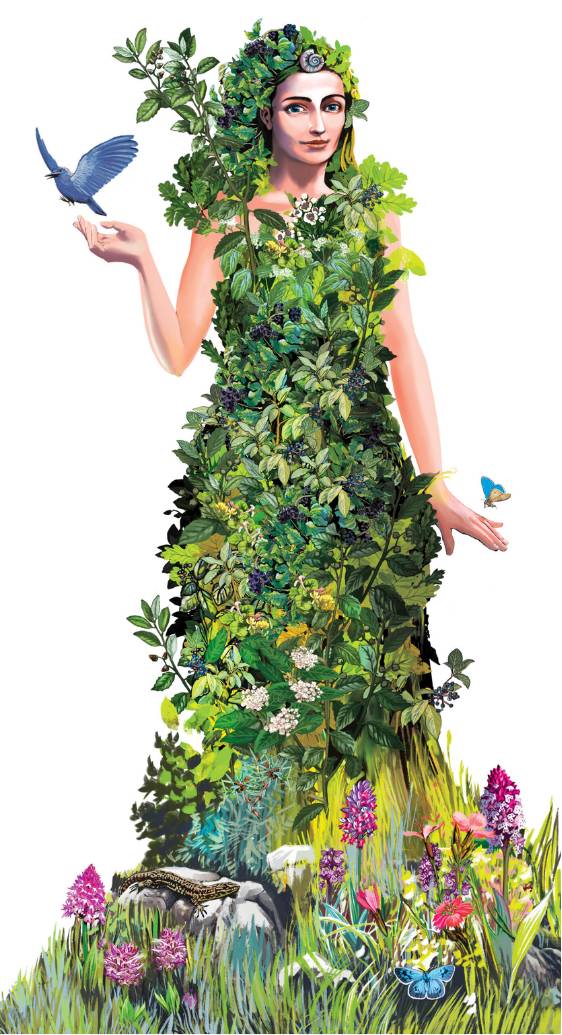
Long before the Roman era, both banks of the Rhône around Valence were inhabited by the Segovellauni people. In Soyons, this deeply religious people worshipped a goddess named Soïo.
Regarded as a protective goddess of the area, Soïo was symbolised by an altar situated on the site of the present-day village of Soyons. This deity was linked to the land and the deep attachment the inhabitants felt towards their homeland.
Indeed, the name Soïo is said to have given rise to the very name of Soyons, evidence of the importance this goddess held in local history.
The altar dedicated to Soïo was discovered in 1848 in the ruins of the Saint-Gervais chapel, on the Malpas plateau in Soyons. Now housed in the Valence Museum, it stands as a testament to the ancient beliefs that once surrounded the village.
Blending history, belief and mystery, the legend of Soïo continues to this day to form part of Soyons’ identity and charm.
3. The Peak of Saint-Romain-de-Lerps and its mystical lights
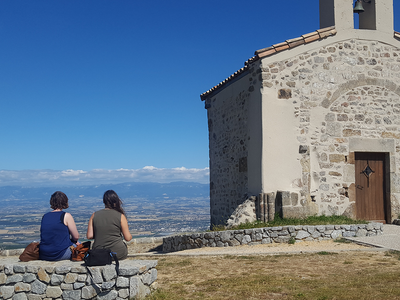
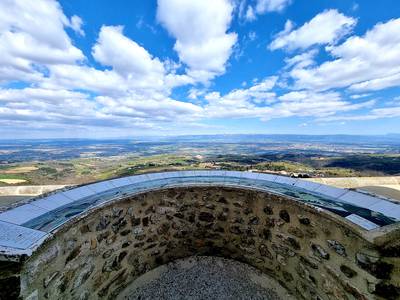
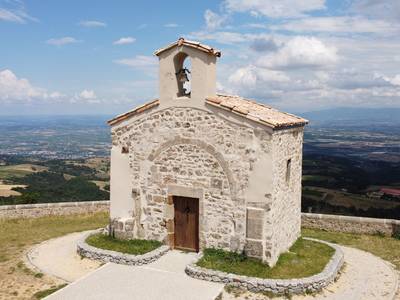
From the viewpoint at the Pic de Saint-Romain-de-Lerps, the view stretches out over the Rhône Valley, the Alps and the Vercors mountains. This site, dominated by a chapel, is believed to have been an ancient crossroads, inhabited as far back as Celtic times.
According to oral tradition, on certain nights, particularly during storms or on St John’s Day, inhabitants of neighbouring villages such as Saint-Sylvestre or Champis claimed to see strange lights around the summit. These lights, described as floating and difficult to explain, were interpreted as the presence of ancient spirits linked to the mountain.
According to local lore, these phenomena are said to be linked to ancient bonfire rituals practised on the site since Celtic times. The construction of a chapel at the summit is said to have signalled a desire to Christianise the site, without entirely eradicating these beliefs.
Even today, the Pic remains a popular destination for its exceptional panoramic views, offering a 360° vista over much of south-eastern France, including the Vercors, the Alps and the Rhône Valley. The site is also a starting point for walks.
4. The healing spring of Galéjas in Saint-Sylvestre
In Saint-Sylvestre, the Chapel of Saint-Martin de Galéjas stands opposite the village church. Its origins are ancient: it is first mentioned in 974, and some evidence even links it to an even earlier presence, dating back to the 7th century.
Next to the chapel, a spring has long been known for its supposed healing properties, particularly for skin conditions. It is said that, over time, its water has brought relief to those who came to wash there or to draw water for medicinal purposes. This is said to be the origin of the name Galéjas, linked to the Occitan word for scabies. For generations, the locals have used this water and attributed special properties to it.
The site also bears traces of ancient times. In the Ardèche, there are numerous “imprint stones”, carved directly into the rock as far back as the Neolithic period (around 4000 BC). Before being cemented over, the spring flowed into one of these stones, forming a small natural pool.
As is often the case in the region, these ancient places of worship were subsequently reappropriated over the centuries. Following the Gallic and Roman periods, they were frequently associated with Saint Martin, an important figure in local Christianity and a symbol of sharing and protection. The footprint stones are, in fact, sometimes called “the hooves of Saint Martin’s horse”.
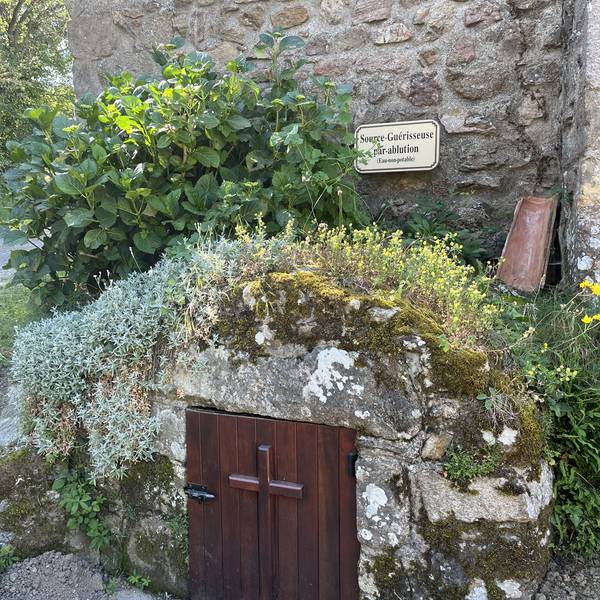
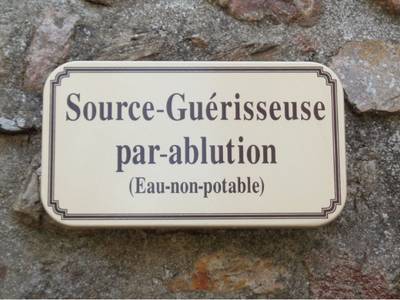
Even today, the spring can be found behind a small door marked with a cross. It’s up to you to open it and discover this magical place !
5. The Devil's Bridge in Thueyts
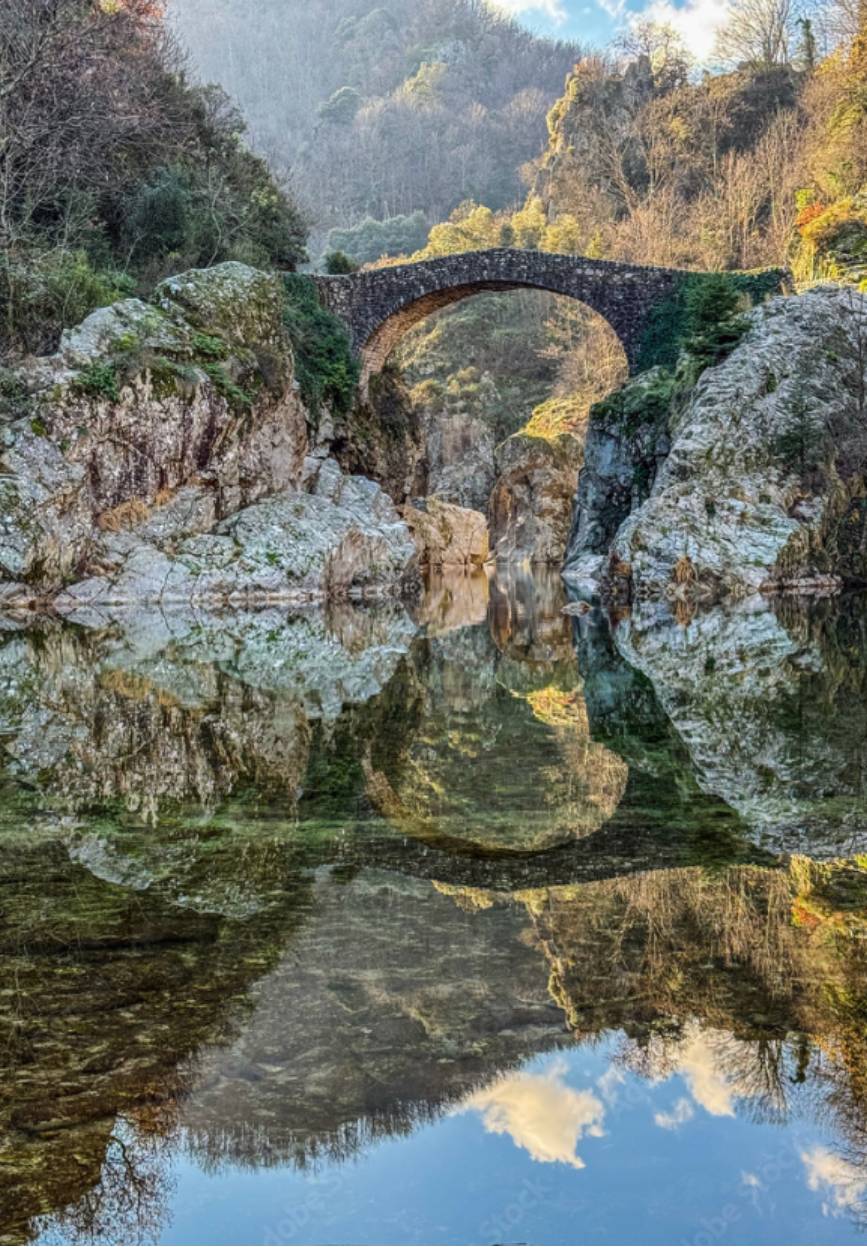
In the heart of the Thueyts Gorges, in the Ardèche Valley, the Devil’s Bridge has long been shrouded in legend. Indeed, the date of its construction remains unknown.
The best-known legend tells that the devil agreed to build the bridge in a single night, in exchange for the soul of the first person to cross it. But the villagers managed to trick him by sending an animal across first. Furious and duped, the devil is said to have left, leaving the bridge to man.
Other tales suggest that his influence over the place was such that he tempted the village youths to cross the bridge, drawn by their hidden desires. Some are said to have fallen into the chasm below, and legend has it that, at times, their cries can still be heard echoing through the valley.
Today, the Devil’s Bridge is best known for its striking beauty. Suspended above the River Ardèche, it is surrounded by cliffs and volcanic landscapes that enhance its spectacular appearance. Hikers and visitors come here seeking the view, the thrills and the site’s unique atmosphere.
So, which place makes you most keen to go and explore it ?