- Lucie TESTARD
- - Nov. 5, 2026
Nestled between the Rhône Valley and the Haut-Vivarais, the Ardèche hinterland harbours a religious heritage of unexpected richness. Romanesque chapels perched on rocky outcrops, healing springs, Cluniac ruins and 360° panoramic views… here are seven stops for a spiritual and scenic road trip through the Ardèche.
1. The Church of Saint-Didier-de-Crussol, in Alboussière
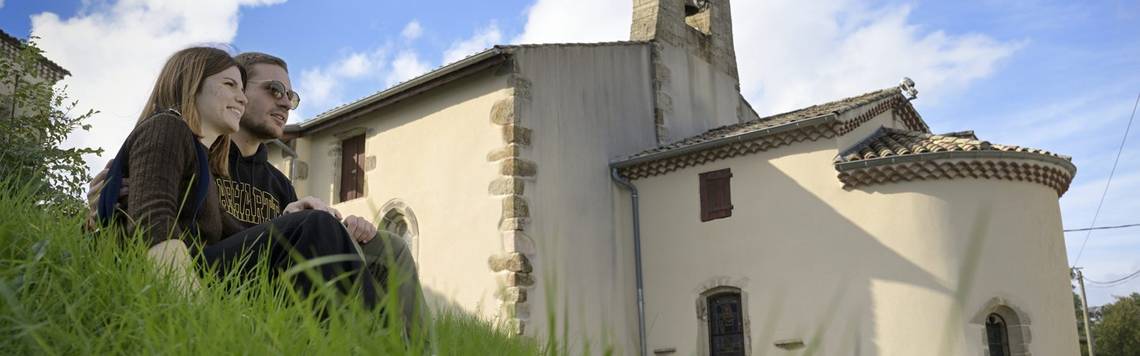
A magnificent church well worth a visit, symbolising the former territory of the Counts of Crussol. First mentioned as early as the 12th century, it was then under the jurisdiction of the powerful Abbey of Saint-Chaffre du Monastier, before being attached to the Jesuit collegiate church at Le Puy-en-Velay. Having been destroyed or severely damaged, it owes its current appearance to a reconstruction carried out at the end of the 15th century by parishioners who were as enterprising as they were devout, and who gave it its beautiful Gothic architectural style.
Long serving as a parish church, it was abandoned in 1965 in favour of a modern building constructed in the new village, Alboussière is, in fact, home to the only church in the Ardèche with a decidedly contemporary style. What an irony for this former commune, which was known as Saint-Didier-de-Crussol before becoming Alboussière in 1880 ! A voluntary organisation, "The Friends of Saint-Didier", now oversees its preservation and organises concerts and talks there; restoration work on the façades took place in 2014. The church is open every day for external viewing, whilst internal visits are available on request.
2. The Romanesque church at Boffres
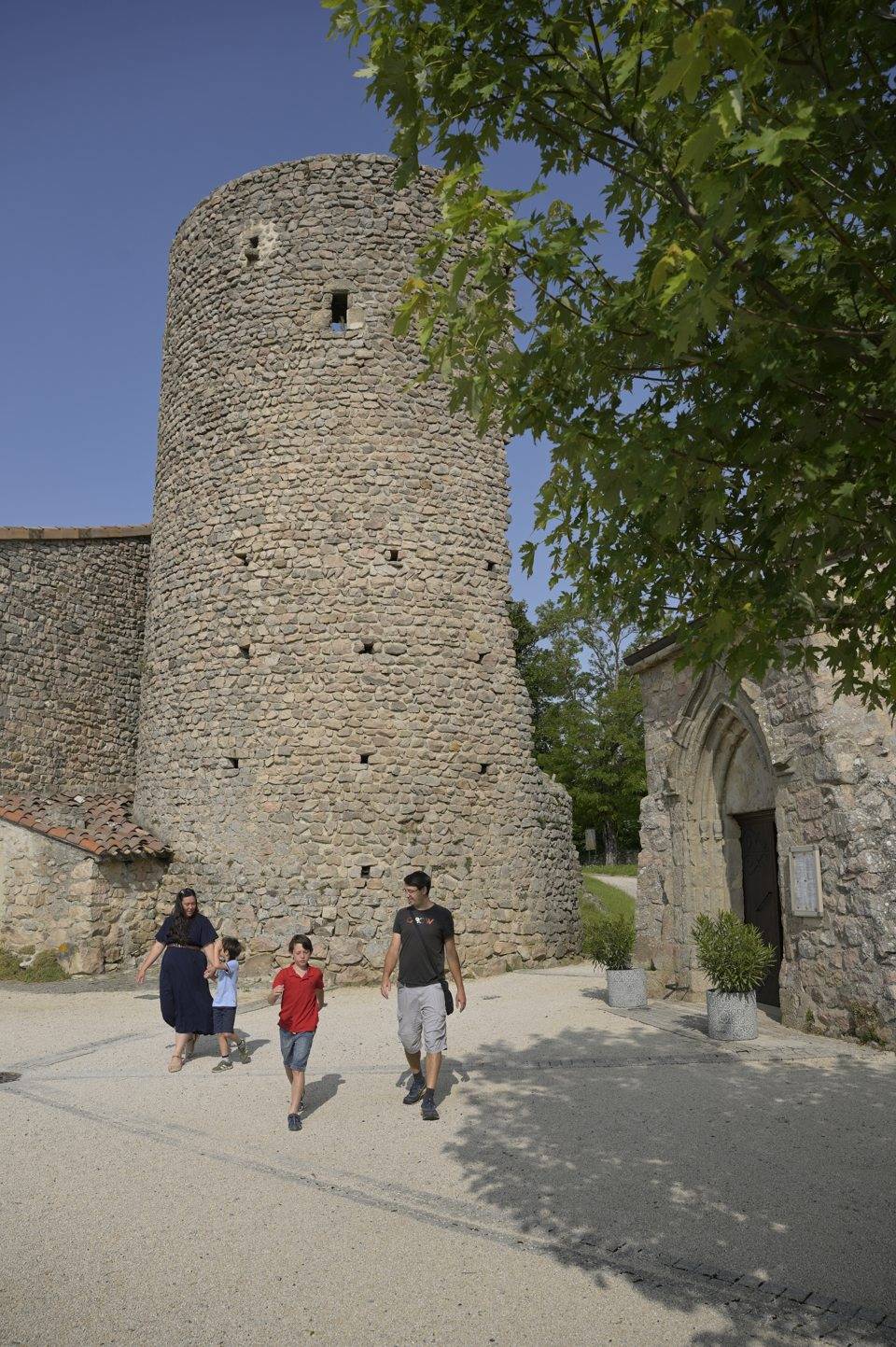
An unmissable stop for anyone who loves hilltop villages steeped in history. The village of Boffres has preserved the remains of its medieval castrum : a 13th-century circular tower built of pink granite and sections of its fortified wall. Right next to it stands the Church of the Exaltation of the Holy Cross, a former castle chapel also dating from the 13th century. Burned down in 1745 during the Wars of Religion, it was rebuilt and enlarged in 1780 to become a parish church, whilst retaining its original choir and apse, which are typically Romanesque in style and built from the same pink granite as the neighbouring keep.
The village, whose name is thought to derive from the Occitan "Balfredo" (the rock where the cold wind blows), has had an eventful history: a Protestant stronghold from its very beginnings, it saw its church destroyed in 1683 and subsequently experienced several waves of resistance, from the reign of Louis XIV to that of Napoleon III. From the church forecourt, the view stretches as far as the Alps and the Massif Central, a panorama that Vincent d’Indy, the famous composer who spent his childhood nearby at the family manor house in Chabret, would certainly have appreciated.
3. St George’s Church, in Saint-Georges-les-Bains
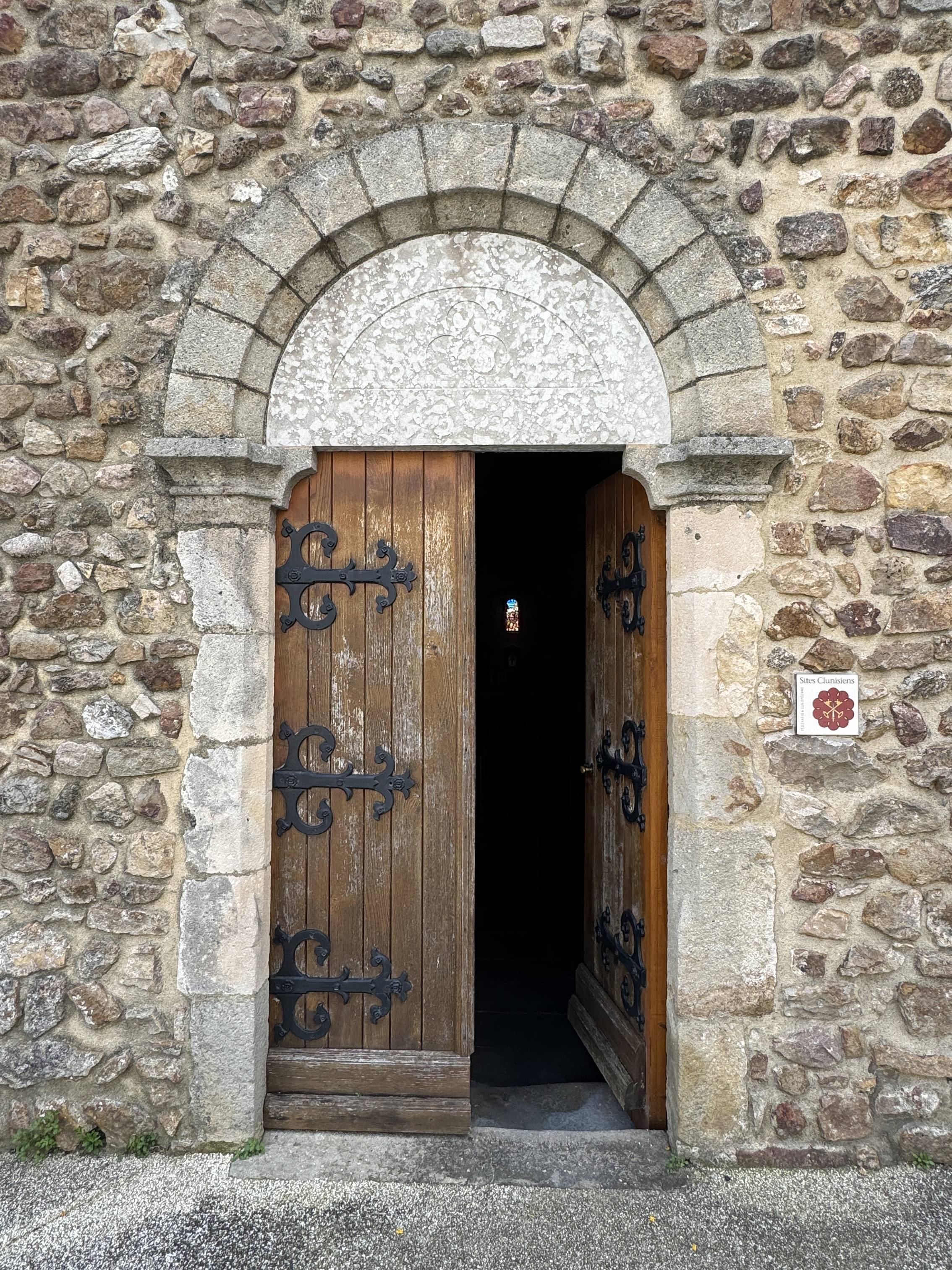
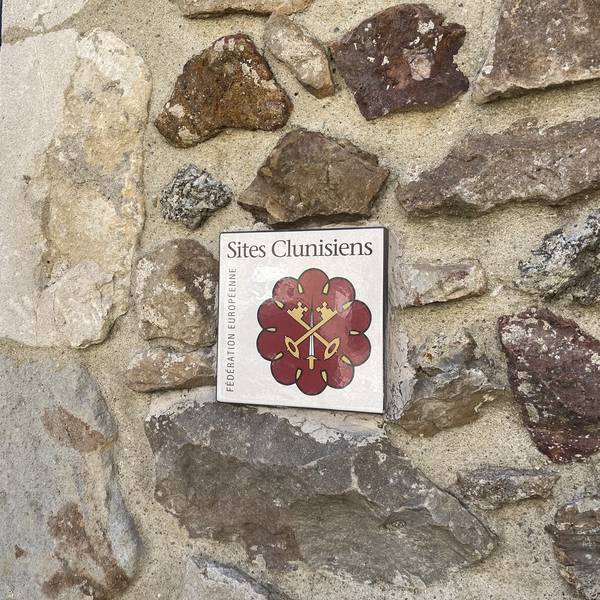
A Romanesque gem not to be missed if you’re passing through the Rhône Valley. Built towards the end of the 10th century, the Church of Saint-Georges is the only remaining structure of the former Cluniac priory that gave rise to the village. Founded by the monks of the powerful Abbey of Cluny, it still features a magnificent semi-circular Romanesque chancel; a stained-glass window depicts Saint George slaying the dragon, protector of soldiers and patron saint of the village. Since 2011, the building has been part of the European Federation of Cluniac Sites, which brings together the key sites that contributed to the influence of the Burgundian abbey from the 10th to the 18th century.
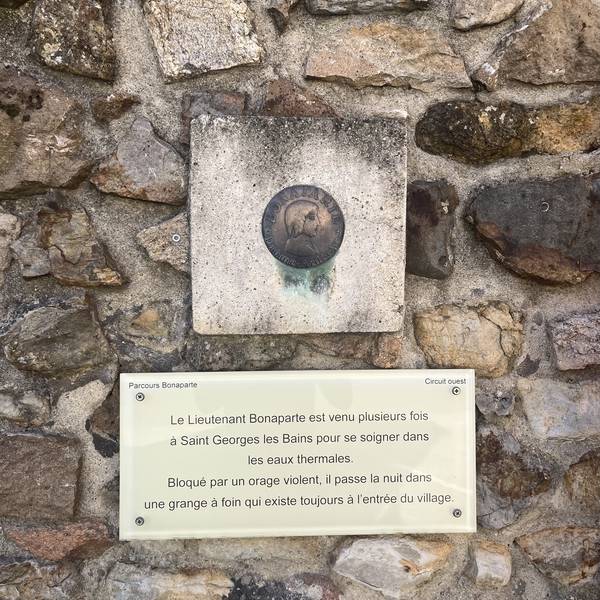
The village owes the second half of its name to an alkaline-sulphurous spring with a constant temperature of 24°C, which has been in use since Roman times : Saint-Georges-les-Bains was thus the first commune in the Ardèche, and indeed in France, to have a thermal pool. Skin conditions were treated there, and it is said that Bonaparte himself came to bathe there. Not far away, the ruins of the Château de Saint-Marcel-de-Crussol, formerly a dependency of the Château de Crussol, serve as a reminder that the village was long attached to this seigneury before taking its definitive name during the Second Empire.
4. The Chapel of Saint-Martin-de-Galéjas, in Saint-Sylvestre
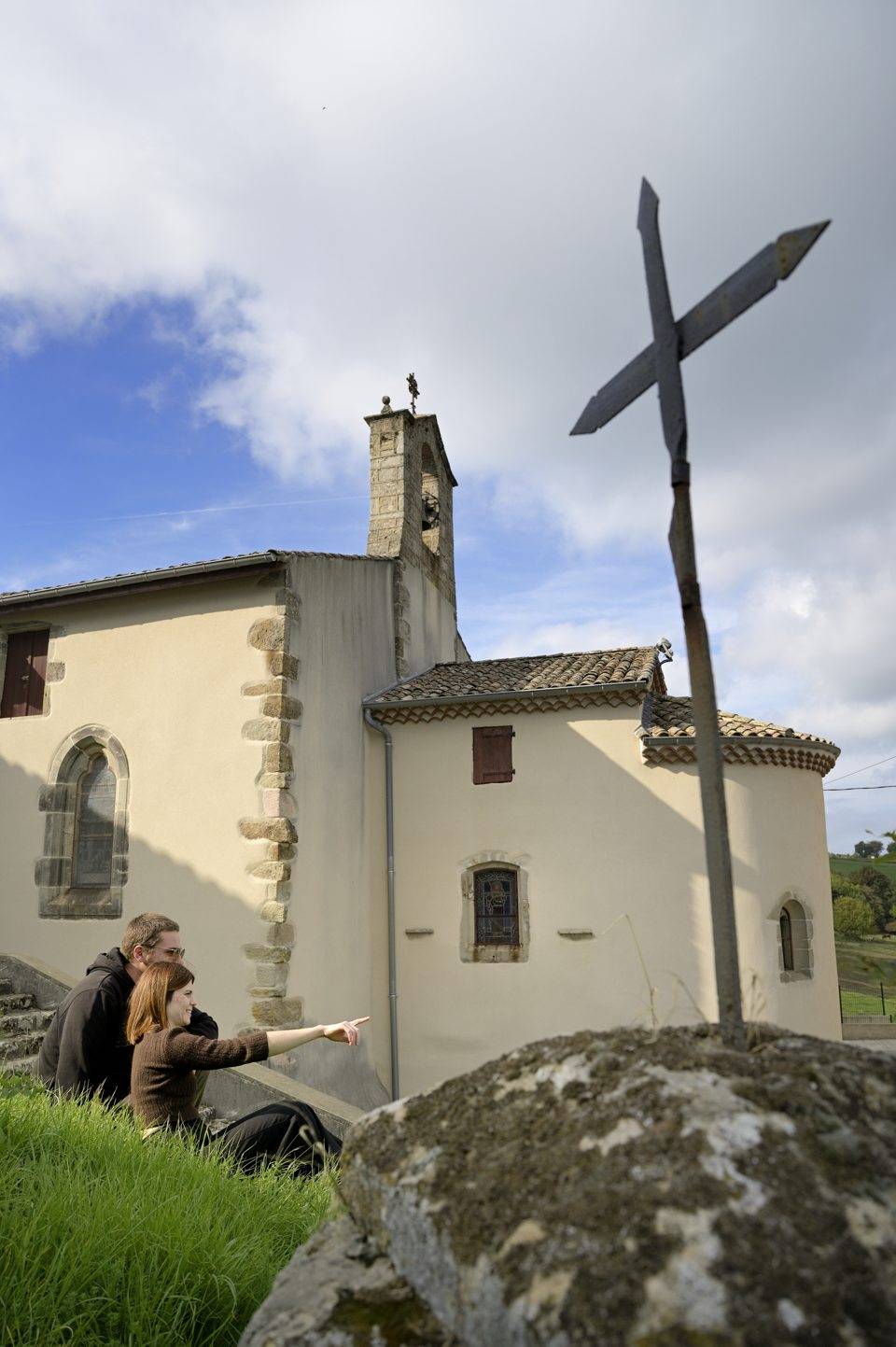
A modest yet fascinating chapel, well worth discovering whilst out for a stroll (you can also find it using the Baludik app !). Just outside the village of Saint-Sylvestre, on the right bank of the Duzon stands this Romanesque building dating from the late 11th or early 12th century, which is striking for the originality of its architecture : the nave (the central part of a church), which was renovated between 1959 and 1961, a square apse and a curious asymmetrical bell tower crowning it. The first written mention of the chapel dates back to 974, in the cartulary of the Benedictine Abbey of Saint-Chaffre du Monastier; at that time, it was listed as a separate parish from Saint-Sylvestre.
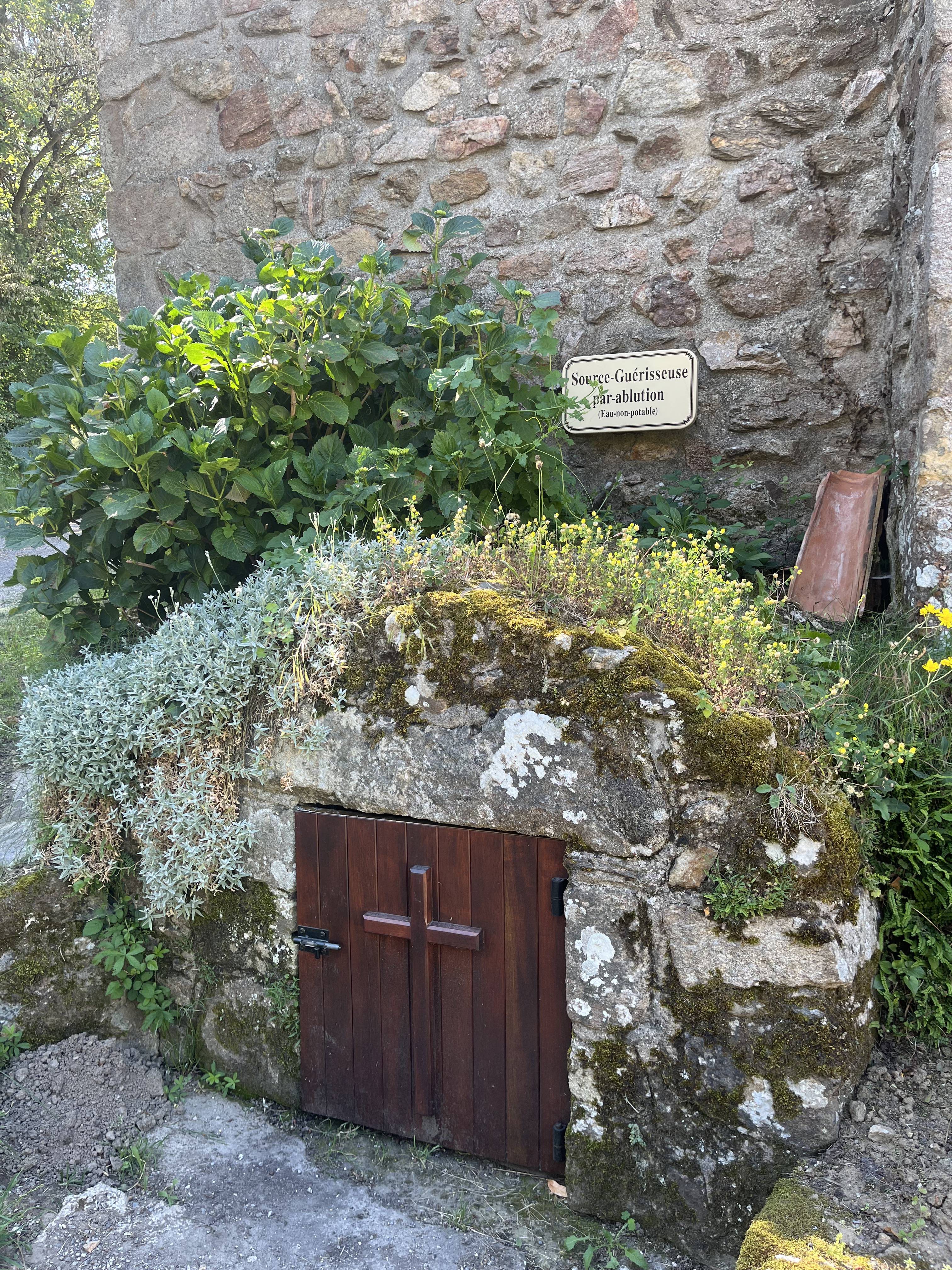
Its name derives from a nearby spring, renowned for centuries for curing scabies and skin diseases (hence "Galéjas") : a small vaulted shelter still collects its water today, near the entrance to the chapel. This site was long a major pilgrimage destination, situated on an ancient mule track linking the Rhône valley to the Vivarais mountains, close to the picturesque Roman bridge spanning the Duzon. Inside, a processional statue carved from lime wood depicts Saint-Martin not as a soldier sharing his cloak, but as the Bishop of Tours, a rather rare representation.
5. The Chapel of La Mûre, in Cornas
A chapel with a touching legend, set in the heart of the Syrah vineyard, which is laid out in an amphitheatre-like formation above the Rhône. The chapel of Notre-Dame-de-la-Mûre, first mentioned as early as the year 960, owes its name to a local tradition : two travellers in distress on the Rhône are said to have vowed that, should they survive, they would build a chapel at the spot where their boat came ashore. Their vow having been fulfilled, they placed a black statue of the Virgin there, similar to the one at Le Puy, hence the name Notre-Dame de la Mûre, or Notre-Dame Noire.
Destroyed during the Wars of Religion around 1570, sold as national property during the Revolution and subsequently stripped of its roof, it was not permanently restored until the 19th century, with the vault, apse and sacristy completed in 1865. Twice a year, a procession used to set out from this chapel to the neighbouring Saint-Pierre Chapel, a place of popular devotion dedicated, in this case, to eye ailments.
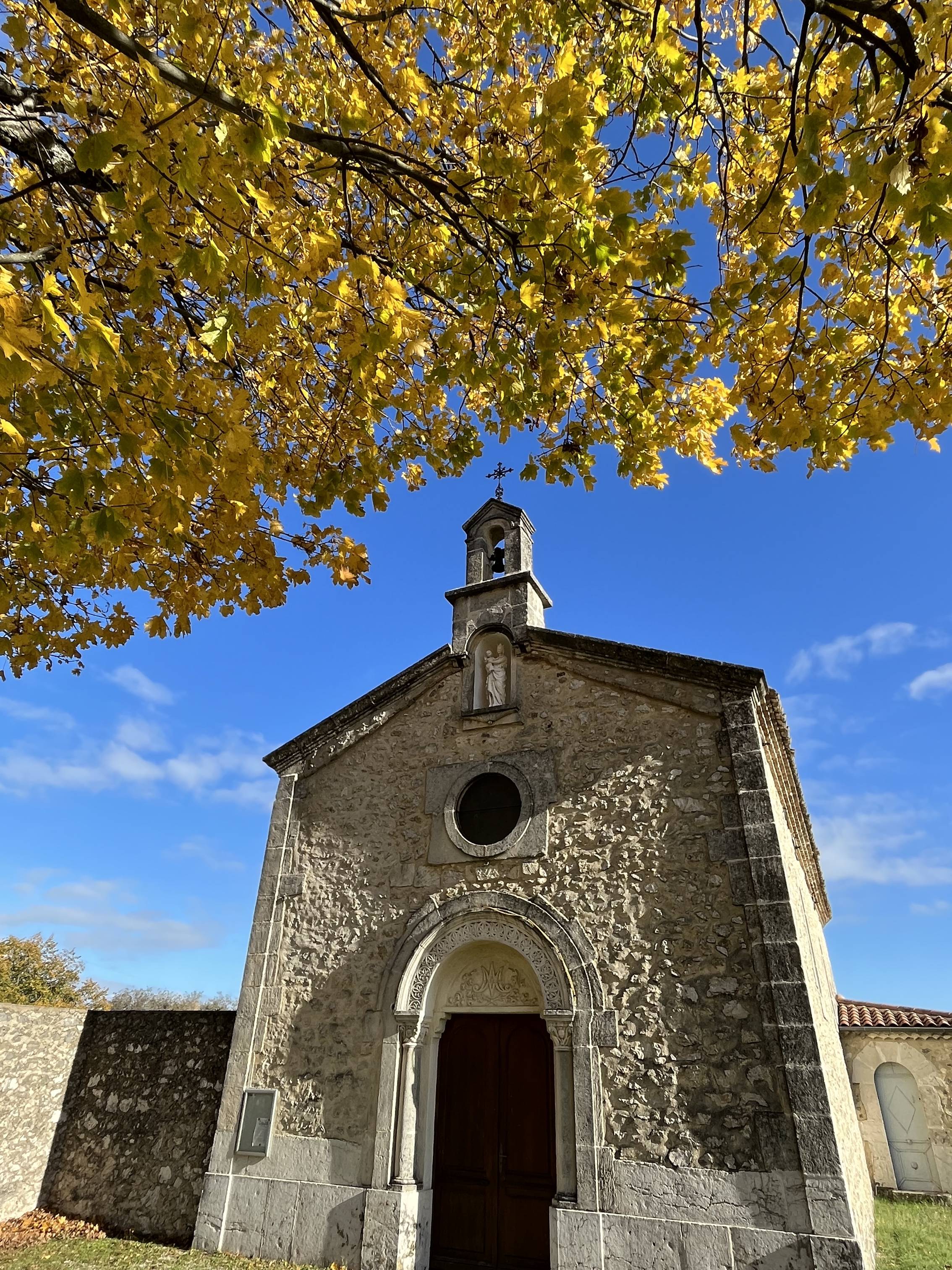
5. The chapels of La Mûre and Saint-Pierre, in Cornas
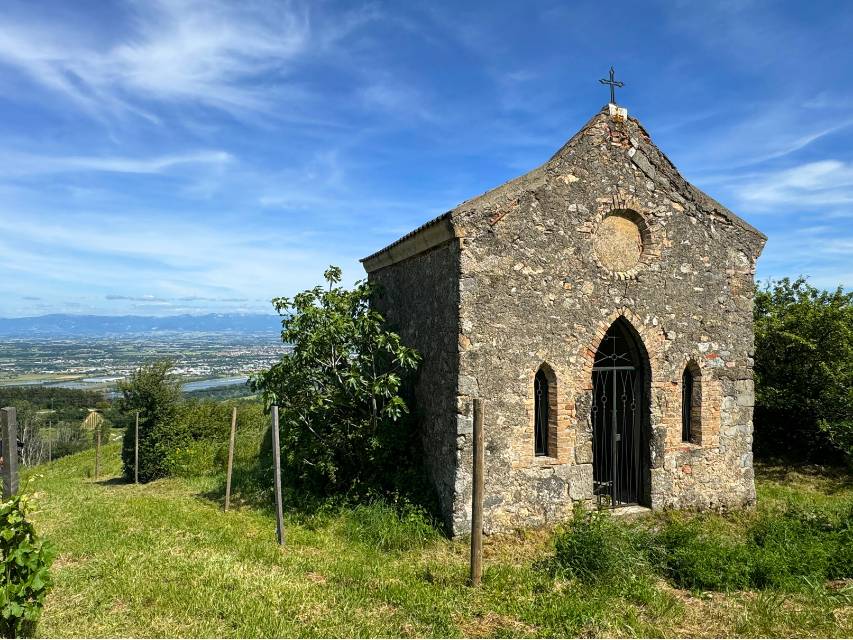
A small rural chapel with an even more mysterious history. First mentioned in a marriage contract dated 22 January 1503, it may well be much older; some believe it to be the legacy of a Celtic or Gallic place of worship. Its single-bay vaulted nave stands near the source of the Chaillot stream, whose water was reputed to cure eye ailments.
It was towards this spring that, twice a year, the procession set out from the Chapel of La Mûre; the two buildings thus formed part of the same route of popular devotion, just a few steps apart.
7. The Pic Viewpoint, in Saint-Romain-de-Lerps
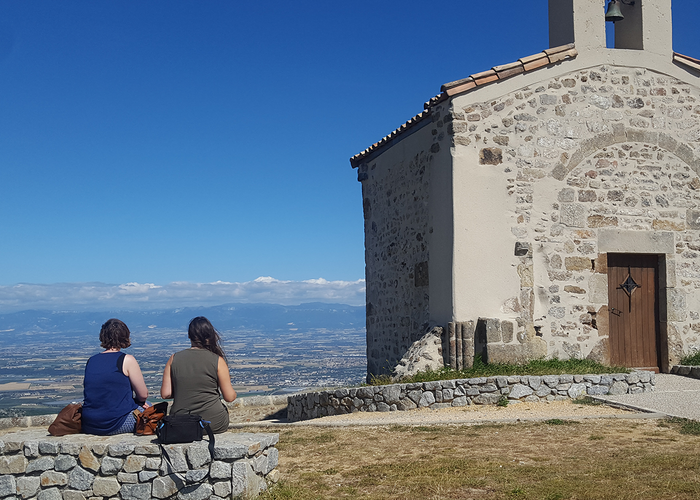
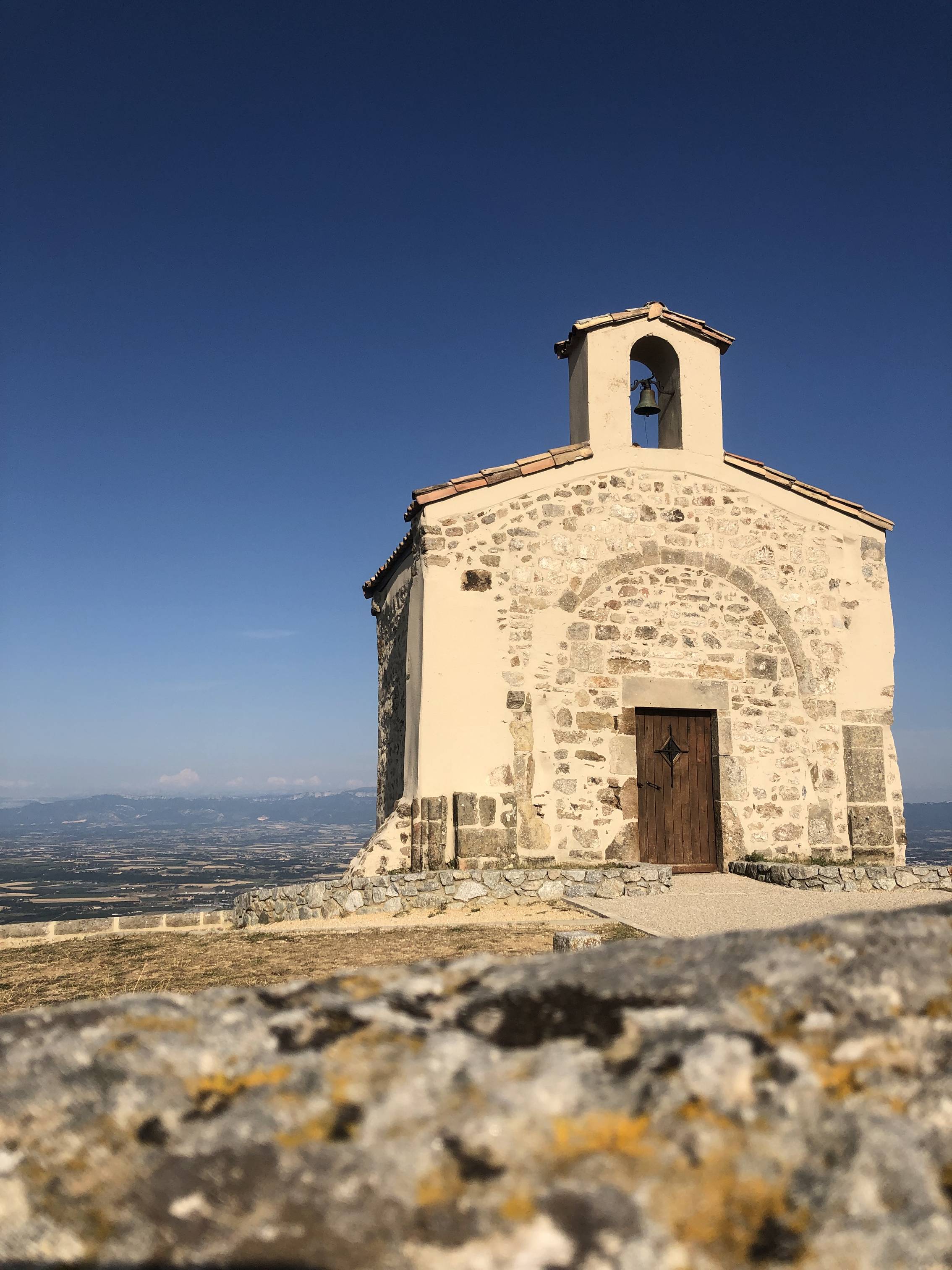
A spectacular stop-off that is not to be missed under any circumstances. This site in Saint-Romain-de-Lerps, unique in Europe and a former strategic location of both military and religious importancen stands at an altitude of 649 metres and offers a 360° panoramic view spanning no fewer than thirteen departments. On one side, the view plunges down into the Rhône valley and towards Crussol Castle, with the Alps as a backdrop, stretching from the Jura to Mont Ventoux on a clear day. On the other, the entire Massif Central unfolds, from Pilat to Mézenc.
The viewpoint is dominated by a small Romanesque chapel, which is none other than the chancel of the village’s former church, dating from the 10th century. Restored in 2013 to improve accessibility, the site now features two information boards and a themed trail dedicated to the local flora, fauna, geology and the mistral. Two moments are said to be particularly magical : in the early morning, when a sea of clouds engulfs the Rhône Valley whilst the Alpine peaks glisten in the distance, and at sunset, when the low-angled light sets the entire panorama ablaze.